
If you’ve ever opened your oven door and been greeted by a mess of baked-on spills and stubborn stains, you’re not alone. Ovens work hard in the heart of the home, and over time, they can accumulate grime that’s tough to tackle. Our oven cleaning expert gives the real scoop on how often to clean your oven, what materials to avoid, and the safest, most effective ways to keep it looking and performing its best.
🧼 How Often Should You Clean Your Oven?
The short answer: once or twice a year will do for most families—especially if you're good about wiping up big spills as they happen. That kind of regular upkeep makes deep cleaning far less daunting.
But if you’re cooking meals daily, or using your oven more frequently than average, you might want to aim for four to five cleanings per year. Many modern ovens also come with a steam clean feature, which is perfect for light soils and can help you stretch the time between deep cleans.

The Best Ways to Maintain a Clean Oven
✨ Inside the Oven
- Use your self-clean or steam clean cycle (if your oven has it), following the manual closely.
- For a manual clean, use soap and water, a wet cloth, or a non-scratch sponge. Abrasive sponges or scrubbers can scratch the oven interior.
Oven Racks
- Light soil? Rinse racks in the sink or outside with a garden hose.
- Heavy soil? Soak racks in warm soapy water to loosen debris.
- Watch out for racks with ball bearings—avoid getting water or cleaner in the sliding mechanisms.
- Check your manual to see if your racks can stay in the oven during a self-clean cycle—some can!
🚪 Oven Door
- Soak a paper towel or cloth with soapy water and let it sit on the glass for about 10 minutes to loosen grime.
🔥 Bonus Tip: Clean Grates Too!
If you’ve got a gas cooktop, some grates can be cleaned in the oven during the self-clean cycle. (Yes, really!) Just double-check the owner’s manual before you toss them in.
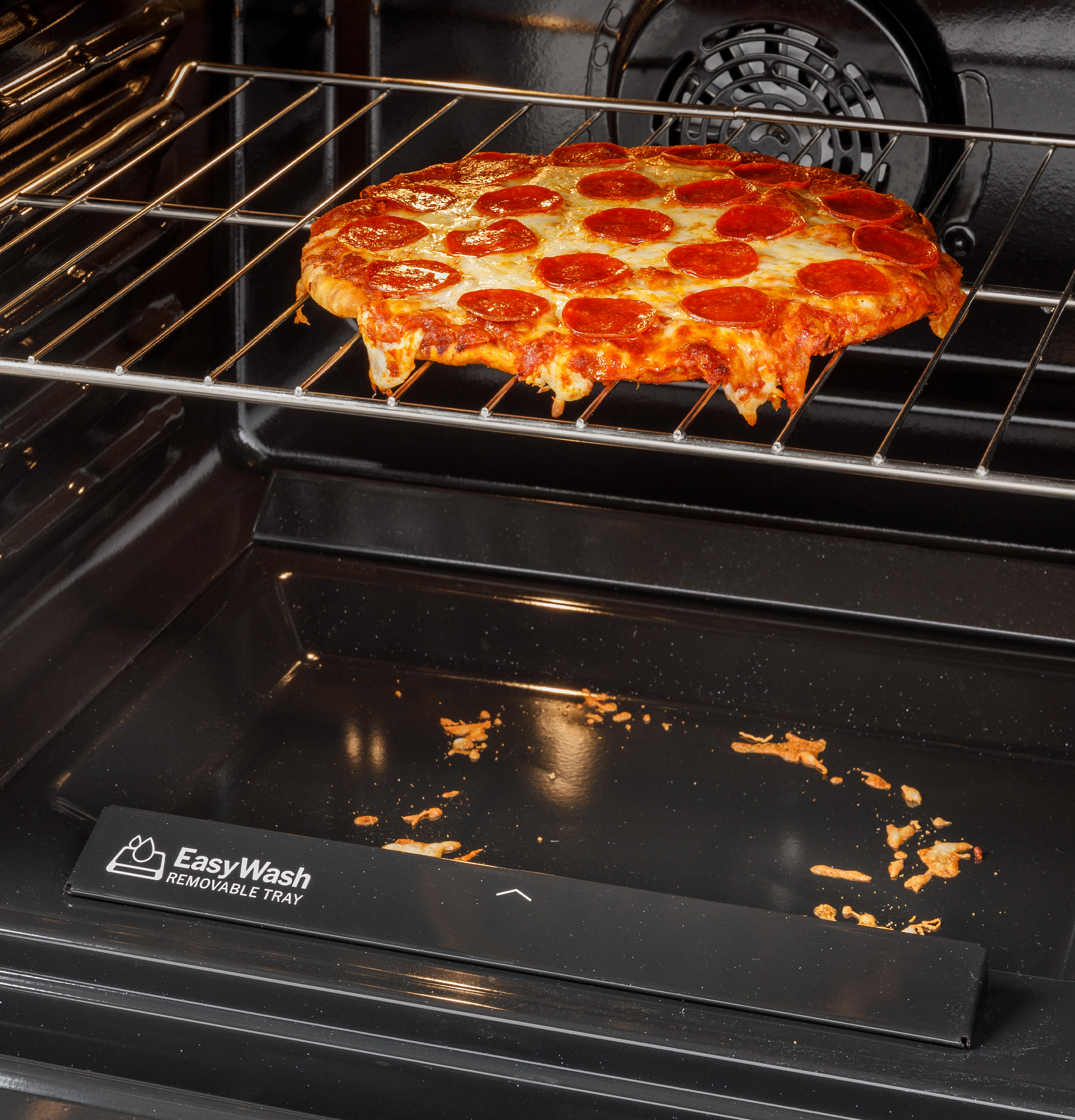
🧼Pro Tip: Check Out GE Appliances' latest innovation—the EasyWash™ Oven Tray! This standout feature is part of several new gas, electric and induction ranges and designed to tackle the pain points of oven cleaning. Instead of spending time scrubbing baked-on spills, you can now simply remove the enameled tray from the oven's bottom, rinse it in the sink, or place it in the dishwasher for effortless cleaning.
🔥 What’s the Deal with Self-Cleaning Oven?
There’s a lot of confusion around self-cleaning ovens, but here’s the truth: Yes, self-cleaning functions are safe—if your oven is designed for it. Appliance engineers test ovens extensively under tough conditions (think baked-on fats, sugars, starches, and more) to make sure the self-clean cycle does its job without compromising performance.
Just follow your manufacturer’s instructions, and you’re good to go.
✅ How to Run a Self-Clean Cycle
Before you dive in, make sure the oven is completely cool. Then follow these safety tips:
- Remove oven racks and doors/drawers for easier access.
- Before running a self-clean cycle, wipe away grease and loose debris. A vacuum with a hose or handheld attachment works great for crumbs.
- Use only oven-safe cleaners that are approved for use in your oven—check your manual if you’re unsure.
- Some people also choose to open windows or run a vent hood during a self-cleaning cycle to help with odors, but it’s not a requirement.

❓ What’s the Difference Between Self-Clean and Steam Clean?
Both are convenient, built-in features designed to make cleaning easier, but they work very differently:
- Self-Clean: This is a high-heat cycle that burns off tough, baked-on food at extremely high temperatures—usually between 800–900°F. It takes several hours to complete and leaves behind ash that you simply wipe away. It’s ideal for deep cleans and heavier messes.
- Steam Clean: This is a much shorter, lower-heat cycle that uses water to soften and loosen light soils. It usually takes under an hour and works best for light maintenance cleaning, especially when used regularly between deep cleanings.
If your oven offers both, using steam clean regularly and self-clean occasionally is a great combo for maintaining a clean and odor-free oven year-round.

Keeping your oven clean doesn't have to be a chore. With a little routine care and the right know-how, your oven will not only look better— it’ll work better too. Whether you're prepping weeknight dinners or holiday feasts, a clean oven is key to a kitchen that runs smoothly.